
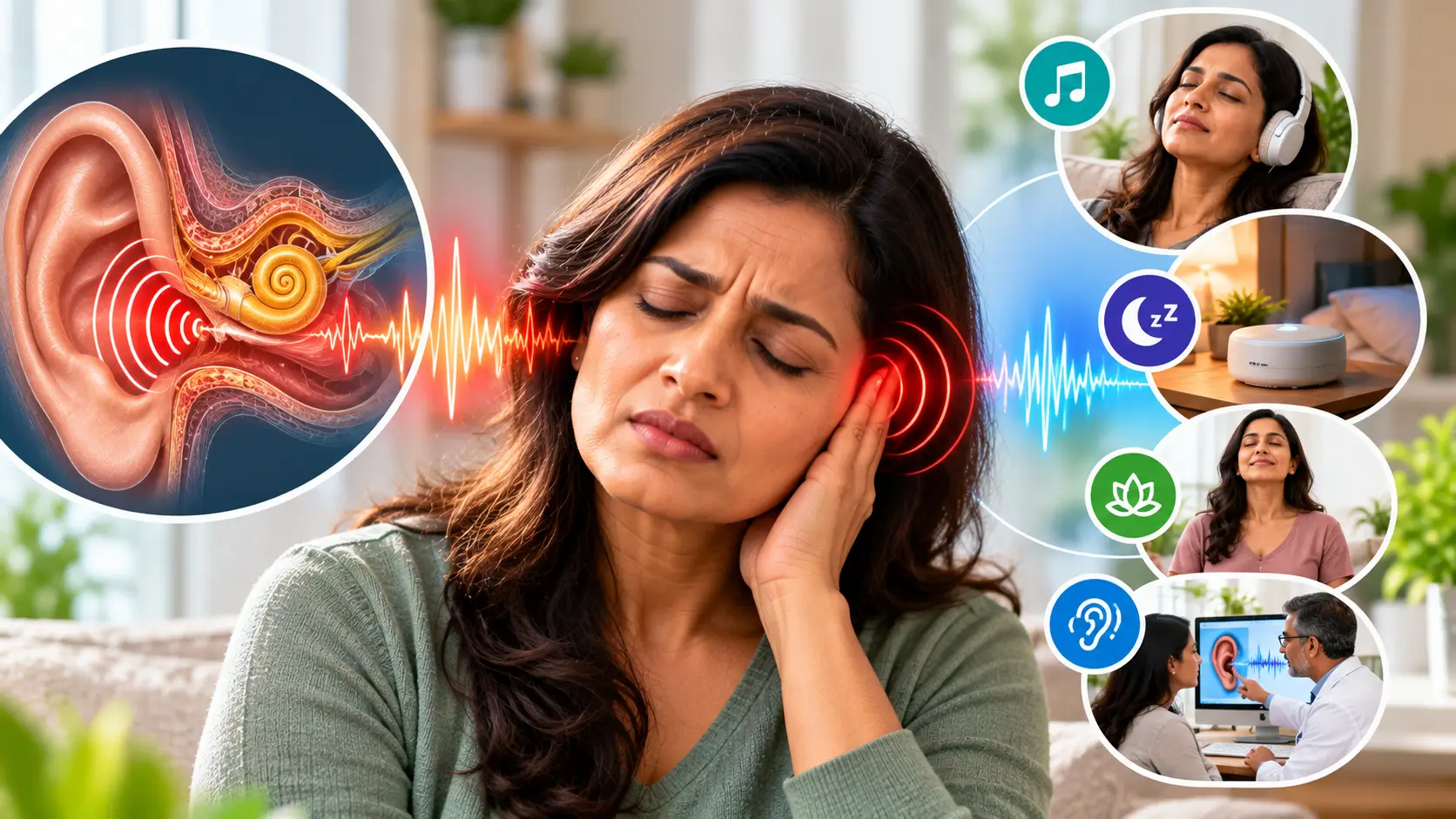
Tinnitus is the perception of ringing, buzzing, hissing or clicking sounds in the ears with no external source. It affects a large share of adults at some point, and while it is rarely dangerous on its own, it can be distracting enough to affect sleep, concentration and mood.
Common Causes
- Age-related or noise-induced hearing loss
- Prolonged exposure to loud sounds (traffic, machinery, headphones at high volume)
- Earwax blockage
- Certain medications
- Stress, fatigue and high blood pressure, which can make existing tinnitus feel louder
Why It Is Often Linked to Hearing Loss
Tinnitus and hearing loss frequently go together. When the ear stops receiving certain sound frequencies clearly, the brain sometimes "fills the gap" with phantom sound — which is perceived as ringing. This is why many people notice their tinnitus becoming less prominent once they start using properly fitted hearing aids.
What Actually Helps
- A proper hearing test — to check whether hearing loss is contributing and rule out a wax blockage or medical cause.
- Hearing aids with tinnitus-masking features — many modern devices from Phonak, Signia, ReSound and Widex include built-in sound therapy programs that play soft, soothing background sound to reduce the perceived loudness of tinnitus.
- Sound enrichment — gentle background noise (a fan, soft music) at night can make silence-triggered tinnitus less noticeable.
- Stress management — since anxiety and poor sleep tend to amplify how loud tinnitus feels.
When to See a Specialist
See an ENT promptly if tinnitus is in only one ear, appears suddenly, is accompanied by dizziness or hearing loss, or pulses in time with your heartbeat.
Get It Checked
If ringing in your ears is bothering you, book a free hearing test at Hear Solution — we will check for underlying hearing loss and talk you through sound therapy options that can help.