 Hear Solution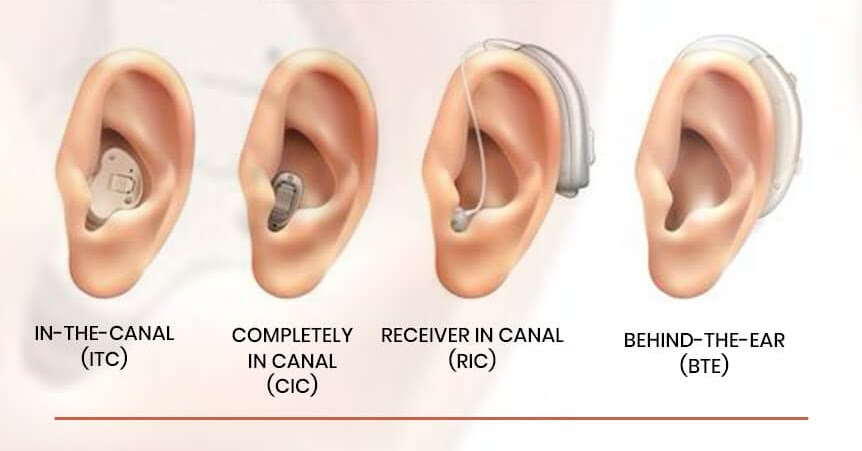
Hearing aids come in several physical styles, each with trade-offs around visibility, power, ease of handling, and suitability for different degrees of hearing loss. Here's what each one actually means.
BTE — Behind-The-Ear
The main body of the device sits behind the ear, with a tube carrying sound to an earmould inside the ear canal. BTEs are generally the most powerful and versatile style, suit a wide range of hearing loss (including more significant loss), and tend to be easiest to handle for people with limited dexterity or vision. They're also the most visible style, though modern BTEs are considerably smaller and more discreet than older models.
RIC — Receiver-In-Canal
A close cousin of the BTE, but the speaker (receiver) sits inside the ear canal itself, connected to the behind-the-ear body by a thin wire instead of a tube. This makes RICs smaller and more discreet than traditional BTEs while still suiting a broad range of hearing loss levels — it's one of the most commonly recommended styles today.
ITC — In-The-Canal
Custom-moulded to sit partly in the ear canal and partly in the outer ear bowl. Smaller and less visible than BTE or RIC styles, ITCs suit mild to moderately severe hearing loss and offer a reasonable balance between visibility and ease of handling.
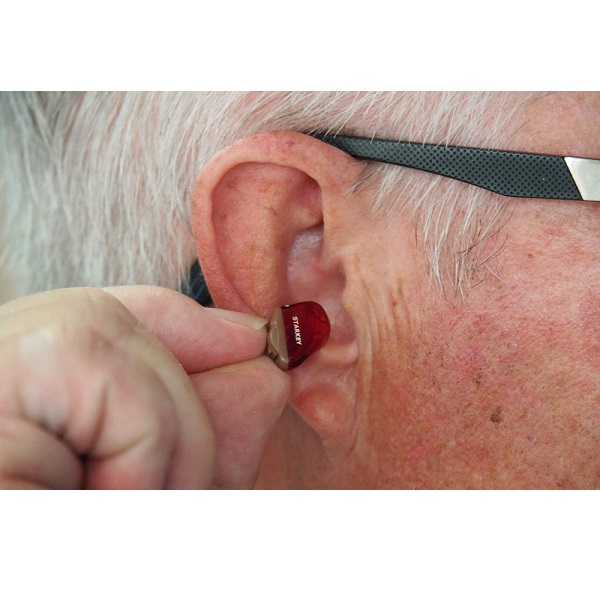
CIC — Completely-In-Canal
Sits almost entirely within the ear canal, making it far less visible than ITC, BTE or RIC styles. CICs suit mild to moderate hearing loss and appeal to people who prioritise discretion, though their small size can make handling and battery changes more fiddly.
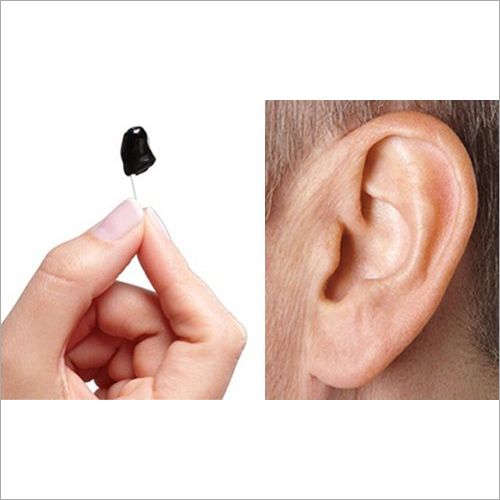
IIC — Invisible-In-Canal
The smallest and most discreet style available, sitting deep enough in the canal to be essentially invisible from the outside. IIC devices suit mild to moderate hearing loss in ears with a suitable canal shape, and — like CICs — trade some ease of handling for maximum discretion.
So which one is right for you?
The honest answer is that it depends on your hearing report, the shape of your ear canal, your dexterity, and how much visibility matters to you personally — not on which style looks best in an advertisement. This is precisely why we don't recommend a style over the phone or online. After your free hearing test, your audiologist will talk through which of these genuinely fits your results and your daily life.